CAIXA PRETA #3 - Onde Reside O Poder
- Gabriel Cabral
- 18 de dez. de 2025
- 11 min de leitura
*English bellow
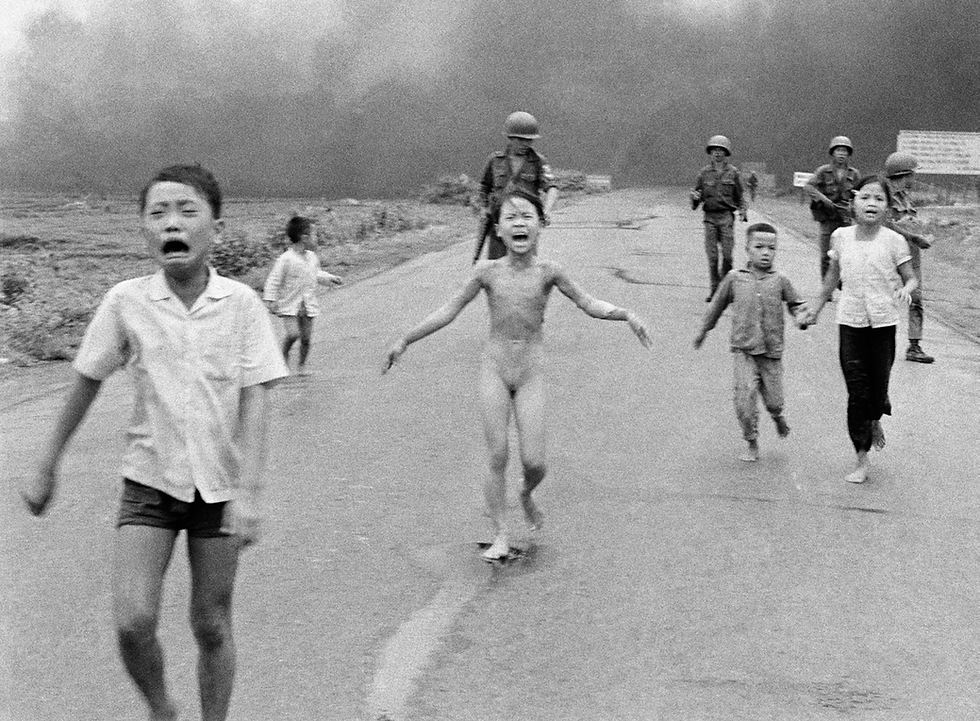
Há textos que nascem com vocação de aventura. Outros surgem como resposta. Este não foi planejado. Ele se impôs.
Quando escrevi Caixa Preta #1 – Precisamos Falar Sobre Robert Capa, em 2020, havia ali um gesto de enfrentamento. Um desejo de romper com a superfície sedutora do mito do fotógrafo de guerra e tocar suas engrenagens internas. Hoje, cinco anos depois, retorno ao mesmo território não por insistência, mas porque a própria história seguiu andando. E, ao andar, abriu novas fissuras. Não se trata mais apenas de um nome, uma fotografia ou uma autoria específica. Trata-se de compreender, afinal, onde reside o poder dentro da cultura visual contemporânea.
Este texto é uma continuação não programada daquele primeiro. Não porque repita seus argumentos, mas porque nasce do mesmo incômodo. Um incômodo que amadureceu.
Como toda boa narrativa, ela começa quase como romance. Um filme surge. Uma investigação se aprofunda. Um crédito histórico é questionado. Mas, muito rapidamente, percebemos que não estamos diante de uma história sobre imagens. Estamos diante de uma história sobre pessoas. Sobre escolhas. Sobre estruturas que operam há décadas sob a aparência de neutralidade.
The Stringer (O Freelancer: O Homem Por Trás da Foto - Netflix, 2025) não corta apenas como uma navalha. Ele corta para dentro. O rosto envelhecido de Carl Robinson, carregado de arrependimento, não é apenas um testemunho individual. É um sintoma. O relato da família de Nghe, atravessado por perdas simbólicas, materiais e afetivas, não é exceção. É consequência. O filme nos obriga a encarar algo que a fotografia, enquanto campo, sempre evitou fazer com profundidade suficiente: olhar para suas próprias hierarquias de poder.
Ao entrevistar Gary Knight, fundador da The VII Foundation e um dos nomes centrais por trás do documentário, isso ficou evidente desde o início. Segundo ele, "Foi complicado, porque desafia a própria profissão." Não por colocar em risco uma carreira, mas por exigir algo muito mais difícil: coerência. Ainda assim, ele afirma que não perdeu noites de sono, porque havia um propósito claro. "Devemos encarar nossa história e suas questões sem medo de se analisar, ou para onde isso vai nos levar. Se mantendo aberto e transparente."
Essa abertura, no entanto, encontra resistência. Especialmente quando toca em "percpecções fixas sobre certas figuras, suas histórias e legados." Desconstruir mitos nunca é um gesto confortável. Ainda mais quando esses mitos sustentam carreiras, instituições e imaginários inteiros. Gary reconhece isso com lucidez ao afirmar que "somos humanos, e erramos!". O problema não está no erro em si, mas na recusa sistemática em revê-lo.
O filme, segundo ele, "mina o mito do heróico fotógrafo de guerra e desafia o que está além do alcance." E talvez por isso gere reações tão polarizadas. Ainda assim, Gary aponta que "a crítica negativa vem de um pequeno grupo", pessoas que "ainda guardam os portões de algo que acreditam ser inquestionável." Não por acaso, o alcance do documentário ultrapassa o circuito especializado. Já com uma audiência global, ele deixa claro que "o público alvo do filme não são apenas pessoas do mundo fotográfico, mas a audiência geral."
Há quem argumente que o silêncio de mais de 50 anos em torno da autoria de Napalm Girl seria prova de que a narrativa apresentada por The Stringer é fabricada. Esse argumento, no entanto, ignora como a história opera. Gary lembra que, desde 1973, o próprio Nick Ut já havia sido confrontado por outro fotógrafo vietnamita sobre a possibilidade de dividir o Pulitzer com Nghe. O mesmo fotógrafo que, décadas depois, revelaria o nome de Nghe à investigação do filme. Além disso, manifestações públicas do editor Carl Robinson sobre o caso existem desde, pelo menos, os anos 1990. Algumas dessas falas não vieram a público por decisões editoriais, motivadas pelo receio de que a controvérsia engolisse outras narrativas.
O que muda, segundo Gary, é o tempo histórico. Ele concorda que "somente de 10 anos para cá há uma abertura do público geral para temas sensíveis como esse." E esse talvez seja um dos pontos centrais. A história não se revela toda de uma vez. Ela se deixa ver conforme as estruturas que a sustentam começam a ceder.
Mais do que discutir um crédito específico, o filme nos força a encarar que "o crédito alterado é só uma das manifestações de uma série de problemas que se apresentam há décadas nessa indústria." Desde o lançamento, Gary relata que "tenho recebido inúmeros relatos de pessoas que dizem ter passado por situações como a de Nghe." Situações que ele próprio presenciou ao longo da carreira. Histórias silenciadas, normalizadas, empurradas para debaixo do tapete em nome de uma narrativa maior, quase sempre construída a partir de um olhar branco, masculino e ocidental.
É nesse ponto que a pergunta deste texto se impõe com mais força: onde reside o poder?
Para Gary, a resposta passa necessariamente pelas histórias locais. Ele observa que, no passado, as coberturas até podiam ser globais, mas as mídias não eram. Hoje, qualquer veículo fala para o mundo inteiro. "Basta eu apertar um botão e o google traduz para mim O Globo." Esse novo cenário exige outra postura. Uma escuta mais atenta. Uma redistribuição real de autoria. É por isso que ele afirma que precisamos ouvir "histórias locais, contadas por pessoas locais", pois é ali "onde reside o poder."
Isso não significa rejeitar o intercâmbio. Gary reconhece que "alguma mistura de perspectivas de fora são importantes também pelo intercâmbio." O problema surge quando essa mistura se transforma em apagamento. Quando o fotógrafo local vira apenas o stringer invisível, descartável, facilmente substituível. Ele questiona, então, como essas pessoas são tratadas hoje. Especialmente quando lembramos que estavam em contextos de guerra, deslocamento forçado, sobrevivência. A trajetória de Carl Robinson, atravessada por guerra, refúgio, migração e silenciamento, evidencia o custo humano dessas estruturas. Custos que se estendem às famílias, às relações, às vidas inteiras.
Gary não hesita em nomear o que viu ao longo da carreira. Concorda que é preconceituosa a forma como jornalistas ocidentais trataram vietnamitas, inclusive com termos profundamente pejorativos. The Stringer expõe a extensão desse apagamento ao mostrar como, no imaginário coletivo, o nome de Nick Ut se tornou praticamente o único representante vietnamita daquela história. Um nome isolado, convenientemente adaptável à narrativa heroica.
Ainda assim, há esperança. Gary acredita que o documentário se tornará material de estudo em escolas de fotografia e jornalismo, e que seu impacto já é perceptível. Para ele, "há um longo legado para The Stringer e as questões que ele apresenta." Um legado que não diz respeito apenas ao passado, mas ao futuro da prática documental.
Minha leitura pessoal do filme é atravessada por esse mesmo sentimento. Acredito que Nghe tenha feito a fotografia. Acredito que Nick não pediu por essa situação, mas também acredito que escolheu seguir em silêncio. Acredito que Gary Knight e a equipe da VII Foundation não buscaram esse confronto, mas entenderam que era hora de encarar o jogo que se apresentava. Não me interessa santificar ninguém, nem demonizar figuras históricas. O que me interessa é reconhecer que existe, sim, uma cultura nefasta na fotografia e no jornalismo. Minoritária talvez, mas profundamente danosa.
Se isso significa que sou ingênuo por “comprar” a história de The Stringer, que seja. Já cansei de ser enganado. Luto há muito tempo por relações mais justas, colaborativas e responsáveis dentro da imagem. Napalm Girl fez parte do meu próprio percurso formativo. Já a li de forma ufanista. Hoje, essa leitura me parece insustentável. Existe algo de muito sério no pacto ético entre mídia e público. Não é à toa que instituições como o World Press Photo vêm travando batalhas constantes para preservar esse lastro de confiança. O fato de o WPP ter retirado o crédito de Nick Ut não é trivial. Para mim, é um sinal claro de que algo ali não se sustenta.
No fim, The Stringer fala menos sobre fotografia e mais sobre humanidade. Sobre ego. Sobre desejo de reconhecimento. Sobre o quanto estamos dispostos a sacrificar outros para manter certas narrativas intactas. O mundo nunca foi justo. Mas o tempo em que vivemos nos convoca a decidir que tipo de linha de frente queremos ocupar. Pelo que lutar? Por quem? E a que custo?
Talvez seja hora de encarar o espelho. E reconhecer o que ainda nos aproxima das barbáries. E, sobretudo, o que estamos dispostos a fazer para nos afastar delas.
--- English Version --- BLACK BOX #3 - WHERE POWER LIES
Some texts are born with a vocation for adventure. Others emerge as a response. This one was not planned. It imposed itself.
When I wrote Black Box #1 – We Need to Talk About Robert Capa, in 2020, there was an act of confrontation there. A desire to break through the seductive surface of the war photographer myth and touch its internal mechanisms. Today, five years later, I return to the same territory not out of insistence, but because history itself kept moving. And as it moved, it opened new fissures. This is no longer just about a name, a photograph, or a specific authorship. It is about understanding, after all, where power resides within contemporary visual culture.
This text is an unplanned continuation of that first one. Not because it repeats its arguments, but because it is born from the same discomfort. A discomfort that has matured.
Like any good narrative, it begins almost like a novel. A film emerges. An investigation deepens. A historical credit is questioned. But very quickly, we realize that we are not facing a story about images. We are facing a story about people. About choices. About structures that have operated for decades under the appearance of neutrality.
The Stringer does not only cut like a razor. It cuts inward. The aged face of Carl Robinson, weighed down by regret, is not merely an individual testimony. It is a symptom. The account of Nghe’s family, marked by symbolic, material, and emotional losses, is not an exception. It is a consequence. The film forces us to confront something that photography, as a field, has always avoided doing with sufficient depth: looking at its own power hierarchies.
When interviewing Gary Knight, founder of The VII Foundation and one of the central figures behind the documentary, this was evident from the very beginning. According to him, "It was complicated, because it challenges the profession itself." Not because it puts a career at risk, but because it demands something far more difficult: coherence. Even so, he states that he did not lose sleep over it, because there was a clear purpose. "We must face our history and its issues without fear of analyzing ourselves, or where that may lead us. Remaining open and transparent."
That openness, however, encounters resistance. Especially when it touches on "fixed perceptions about certain figures, their histories and legacies." Deconstructing myths is never a comfortable gesture. Even more so when those myths sustain careers, institutions, and entire imaginaries. Gary acknowledges this with clarity when he states that "we are human, and we make mistakes!" The problem is not the mistake itself, but the systematic refusal to revisit it.
The film, according to him, "undermines the myth of the heroic war photographer and challenges what lies beyond reach." And perhaps for that reason it generates such polarized reactions. Even so, Gary points out that "the negative criticism comes from a small group," people who "still guard the gates of something they believe to be unquestionable." Not by chance, the documentary’s reach goes beyond specialized circuits. With a global audience, it makes clear that "the target audience of the film is not only people from the photographic world, but the general audience."
Some argue that the more than 50 years of silence surrounding the authorship of Napalm Girl would be proof that the narrative presented by The Stringer is fabricated. This argument, however, ignores how history operates. Gary recalls that as early as 1973, Nick Ut himself had already been confronted by another Vietnamese photographer about the possibility of sharing the Pulitzer with Nghe. The same photographer who, decades later, would reveal Nghe’s name to the film’s investigation. In addition, public statements by editor Carl Robinson about the case have existed since at least the 1990s. Some of these accounts did not reach the public due to editorial decisions, motivated by fear that the controversy would overtake other narratives.
What changes, according to Gary, is historical time. He agrees that "only in the last 10 years has there been an openness among the general public to sensitive topics like this." And this may be one of the central points. History does not reveal itself all at once. It becomes visible as the structures that sustain it begin to give way.
More than discussing a specific credit, the film forces us to confront that "the altered credit is just one manifestation of a series of problems that have existed in this industry for decades." Since its release, Gary reports that "I have received countless accounts from people who say they went through situations like Nghe’s." Situations he himself witnessed throughout his career. Silenced stories, normalized, swept under the rug in the name of a larger narrative, almost always constructed from a white, male, Western perspective.
It is at this point that the question of this text asserts itself most strongly: where does power reside?
For Gary, the answer necessarily passes through local stories. He observes that in the past, coverage may have been global, but media was not. Today, any outlet speaks to the entire world. "All I have to do is press a button and Google translates O Globo for me." This new scenario demands a different posture. A more attentive listening. A real redistribution of authorship. That is why he states that we need to listen to "local stories, told by local people," because that is "where power resides."
This does not mean rejecting exchange. Gary acknowledges that "some mixture of outside perspectives is also important for exchange." The problem arises when this mixture turns into erasure. When the local photographer becomes merely the invisible, disposable stringer, easily replaceable. He then questions how these people are treated today. Especially when we remember that they were in contexts of war, forced displacement, survival. The trajectory of Carl Robinson, marked by war, refuge, migration, and silencing, exposes the human cost of these structures. Costs that extend to families, relationships, entire lives.
Gary does not hesitate to name what he witnessed throughout his career. He agrees that the way Western journalists treated Vietnamese people was prejudiced, including the use of deeply pejorative terms. The Stringer exposes the extent of this erasure by showing how, in the collective imagination, Nick Ut’s name became practically the sole Vietnamese representative of that history. A solitary name, conveniently adaptable to a heroic narrative.
Even so, there is hope. Gary believes the documentary will become study material in photography and journalism schools, and that its impact is already visible. For him, "there is a long legacy for The Stringer and the issues it raises." A legacy that concerns not only the past, but the future of documentary practice.
My personal reading of the film is permeated by this same feeling. I believe Nghe took the photograph. I believe Nick did not ask for this situation, but I also believe he chose to remain silent. I believe Gary Knight and the team at the VII Foundation did not seek this confrontation, but understood that it was time to face the game that presented itself. I am not interested in sanctifying anyone, nor in demonizing historical figures. What interests me is recognizing that there is, indeed, a harmful culture in photography and journalism. Perhaps a minority, but deeply damaging.
If this means that I am naïve for “buying” The Stringer’s story, so be it. I am tired of being deceived. I have long fought for fairer, more collaborative and responsible relationships within image-making. Napalm Girl was part of my own formative path. I once read it through a triumphalist lens. Today, that reading seems unsustainable. There is something very serious in the unspoken ethical pact between media and the public. It is no coincidence that institutions such as World Press Photo have been fighting constant battles in recent years to preserve this foundation of trust. The fact that WPP removed Nick Ut’s credit is not trivial. To me, it is a clear sign that something there does not hold up.
In the end, The Stringer speaks less about photography and more about humanity. About ego. About the desire for recognition. About how far we are willing to sacrifice others in order to keep certain narratives intact. The world has never been fair. But the time we live in calls on us to decide what kind of front line we want to occupy. What to fight for? For whom? And at what cost?
Perhaps it is time to face the mirror. And recognize what still brings us close to barbarism. And, above all, what we are willing to do to move away from it.


Comentários